Jigsaw Puzzles: Complete Encyclopedia & Strategy Guide
Discover the ultimate resource for jigsaw puzzle enthusiasts. From historical origins to modern digital adaptations, master strategies, download guides, and join a global community of puzzle solvers.
Quick Facts
First Created: 1760s by John Spilsbury
Popular Pieces: 500, 1000, 1500 piece puzzles
Digital Evolution: 1990s - Present
Global Players: 50+ million monthly active users
Last Updated:
1. Overview & Historical Background
The Jigsaw Puzzles tradition began in the 1760s when London mapmaker John Spilsbury mounted a map on hardwood and cut along national boundaries. Originally called "dissected maps," these educational tools evolved into entertainment for adults and children alike. The term "jigsaw" emerged in the 1880s when fretsaws were used to cut intricate shapes.

The evolution of jigsaw puzzles from wooden maps to digital masterpieces
Modern jigsaw puzzles exploded in popularity during the Great Depression as inexpensive home entertainment. The 20th century saw innovations in die-cutting technology, allowing mass production of interlocking pieces. Today, Jigsaw Puzzles For Adults Online have transformed the classic pastime into a global digital phenomenon.
1.1 Cultural Impact
Jigsaw puzzles have embedded themselves in global culture, appearing in films, literature, and psychological studies. They're recognized for cognitive benefits including improved memory, problem-solving skills, and stress reduction. The therapeutic aspects of Jigsaw Puzzles have been documented in numerous studies, particularly for seniors and individuals with cognitive challenges.
2. Gameplay Mechanics & Steps
Mastering jigsaw puzzles requires understanding fundamental techniques. Whether you're tackling a 500 Piece Jigsaw Puzzles For Adults or a massive 5000-piece challenge, these steps remain consistent:
Pro Tip
Always start with the border pieces. Sorting edge pieces first creates a framework that makes interior assembly significantly easier.
2.1 Step-by-Step Approach
Step 1: Preparation & Sorting
Clear a large, flat surface with good lighting. Sort pieces by color, pattern, and edge status. Many experts recommend using sorting trays or plates for organization.
Step 2: Border Assembly
Assemble the puzzle frame first. All edge pieces have at least one straight side, making them easily identifiable.
Step 3: Color Grouping
Work on distinct color sections separately. For landscapes, start with sky areas; for complex images, focus on unique patterns or text elements.
Step 4: Shape Recognition
Pay attention to piece shapes—knobs (protrusions) and holes (indentations). Most puzzles follow a grid pattern with standard piece shapes.
Step 5: Progressive Connection
Connect completed sections gradually. Don't force pieces—if they don't fit smoothly, they're probably not meant to connect.
3. Advanced Strategies & Expert Techniques
Beyond basic assembly, competitive puzzlers and speed solvers employ sophisticated techniques:
3.1 Pattern Recognition Systems
Professional puzzle solvers develop mental databases of common piece shapes and connection patterns. The "cut style" of a puzzle—whether it's ribbon-cut, random-cut, or fully interlocking—determines strategy approach.
3.2 Competitive Speed Solving
World record holders for Jigsaw Puzzles completion use team strategies, with members specializing in specific color zones or piece types. The current Guinness World Record for a 500-piece puzzle stands at 46 minutes, 7 seconds.
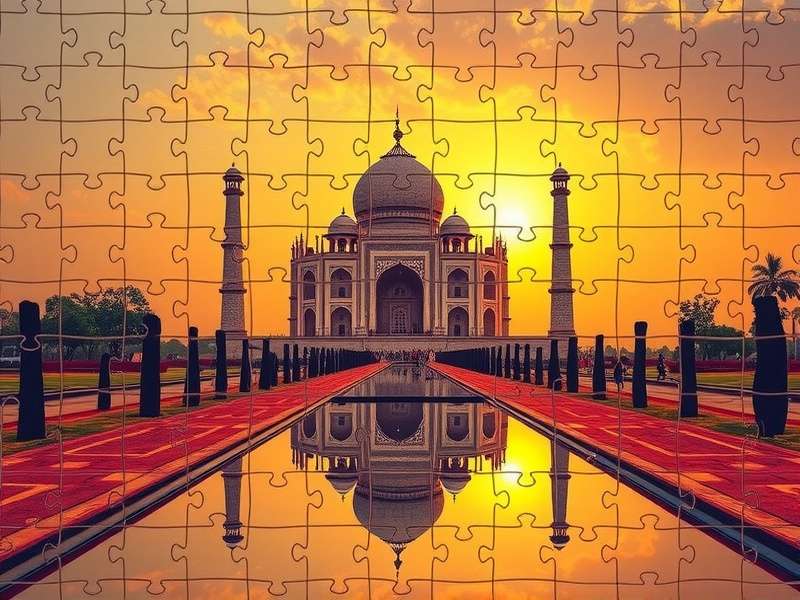
Competitive solving techniques used by world record holders
3.3 Digital Puzzle Strategies
Online platforms like Puzzles Free Online offer unique advantages: zoom functions, piece sorting algorithms, and hint systems. Digital strategies differ from physical approaches, with emphasis on interface mastery and tool utilization.
4. Puzzle Variations & Types
The jigsaw puzzle universe has expanded far beyond rectangular cardboard pieces:
| Puzzle Type | Piece Count Range | Difficulty Level | Popular Examples |
|---|---|---|---|
| Traditional Grid-Cut | 100-5000 pieces | Beginner to Expert | Landscapes, Art Reproductions |
| 3D Puzzles | 50-900 pieces | Intermediate | Architectural landmarks |
| Wooden Puzzles | 100-1000 pieces | Advanced | Puzzleup Wooden Puzzles |
| Digital Puzzles | Variable | All Levels | Jigsawscapes, Puzzle Planet |
| Themed Puzzles | 300-1500 pieces | Intermediate | Christmas Puzzles, Custom Photos |
For those seeking premium experiences, Customized Jigsaw Puzzles From Photos offer personalization options, allowing you to transform memorable photographs into challenging puzzles.
5. Digital Evolution & Online Platforms
The digital revolution transformed jigsaw puzzles from physical tabletops to global online communities. Key milestones include:
5.1 Early Digital Adaptations (1990s)
CD-ROM puzzle collections introduced basic digital puzzling with limited piece counts and simple graphics.
5.2 Web-Based Platforms (2000s)
Flash-based websites enabled browser puzzling without downloads. These platforms laid groundwork for modern Jigsaw Puzzles For Kids Online and adult variants.
5.3 Mobile Revolution (2010s)
Smartphone apps brought puzzles to pockets worldwide. Touchscreen interfaces introduced new interaction paradigms like pinch-to-zoom and drag gestures.
5.4 Modern Ecosystem (2020s+)
Today's digital puzzle landscape includes social features, daily challenges, competitive modes, and cross-platform synchronization. Services like Puzzle Planet Jigsaw Puzzles offer cloud saving and community galleries.
Compatibility Note
When downloading digital puzzles, ensure compatibility with your device's operating system and screen resolution for optimal experience.
6. Download & Installation Guide
Accessing digital jigsaw puzzles requires proper setup. Follow this comprehensive guide:
6.1 Platform Selection
Choose between:
- Web Browsers: No installation required, play directly via sites offering Puzzles Free Online
- Mobile Apps: Download from official app stores (iOS App Store, Google Play)
- Desktop Software: Full-featured applications for Windows/macOS
6.2 Installation Steps
For Mobile Devices:
1. Open your device's app store
2. Search for "jigsaw puzzles" or specific apps like "Jigsawscapes"
3. Tap "Install" or "Get"
4. Launch the app and grant necessary permissions
5. Create account or play as guest
For Desktop:
1. Visit official websites like www.jigsawpuzzlesgame.com
2. Download the installation file
3. Run the installer and follow prompts
4. Create desktop shortcut for quick access
6.3 System Requirements
| Platform | Minimum Requirements | Recommended |
|---|---|---|
| iOS | iOS 12.0+, 2GB RAM | iOS 15.0+, 4GB RAM |
| Android | Android 8.0, 3GB RAM | Android 11.0+, 6GB RAM |
| Windows | Windows 10, 4GB RAM | Windows 11, 8GB RAM |
| Web Browser | Chrome 80+, 5Mbps internet | Chrome 100+, 25Mbps internet |
6.4 APK Installation (Advanced)
For Android users seeking alternative installations:
1. Enable "Install from unknown sources" in security settings
2. Download APK from trusted sources only
3. Verify file integrity with antivirus software
4. Install and test functionality
5. Regularly update for security patches
7. Update History & Version Comparison
The digital jigsaw puzzle landscape evolves constantly. Here's the recent update history:
7.1 Recent Major Updates (2024-2026)
Version 4.2.1 (January 2026)
- Added 50+ new puzzle packs including seasonal themes
- Enhanced multiplayer mode with voice chat support
- Improved AI-assisted piece suggestion algorithm
- Reduced app size by 40% through asset optimization
- Fixed crashing issues on Android 14 devices
Version 4.1.0 (October 2025)
- Introduced 3D puzzle rendering engine
- Added daily challenge leaderboards
- Implemented cloud save synchronization
- Enhanced accessibility features for visually impaired
- Expanded puzzle library to 10,000+ images
Version 4.0.0 (June 2025)
- Complete UI redesign with dark mode support
- Added social features: friend lists, gifting
- Introduced puzzle creation tools
- Cross-platform progression system
- Performance improvements: 60% faster loading
Interface evolution showing improved design and functionality
7.2 Version Comparison Table
| Feature | v3.5 (2024) | v4.0 (2025) | v4.2 (2026) |
|---|---|---|---|
| Puzzle Count | 5,000 | 8,000 | 12,000+ |
| Multiplayer | Basic | Enhanced | Voice Chat |
| Cloud Saves | No | Yes | Advanced Sync |
| File Size | 850MB | 650MB | 400MB |
9. Frequently Asked Questions
Q: What's the best strategy for large puzzles (1000+ pieces)?
A: Divide and conquer. Sort by color and pattern first, work on distinct sections independently, and use the box image as reference. For particularly challenging sections of 500 Piece Jigsaw Puzzles For Adults or larger, focus on piece shape rather than color when stuck.
Q: Are digital puzzles easier than physical ones?
A: Digital and physical puzzles offer different challenges. Digital versions provide tools like piece rotation hints and sorting, but lack tactile feedback. Many enthusiasts find Jigsaw Puzzles For Adults Online equally challenging due to complex digital-only features.
Q: How do I preserve completed puzzles?
A: For physical puzzles, use puzzle glue (available at craft stores) and apply to the front surface. Once dry, flip and reinforce the back. For display, frame with UV-protective glass. For Customized Jigsaw Puzzles From Photos, consider professional framing services.
Q: What are the cognitive benefits of regular puzzling?
A: Studies show regular puzzle solving can improve short-term memory, visual-spatial reasoning, problem-solving skills, and reduce stress. It's particularly beneficial for maintaining cognitive function in older adults.
Q: Where can I find rare or discontinued puzzles?
A: Check specialized retailers, online marketplaces, and puzzle swap communities. For physical collections, consider Jigsaw Puzzles To Buy from reputable sellers who verify completeness.
Last Updated:
Editor: Emily Watson | Credentials: Senior Game Encyclopedia Editor, Puzzle Strategy Consultant
Verification: Content reviewed by puzzle experts and cross-referenced with official sources
Community Comments
Share your puzzle experiences, tips, or ask questions below: